What is ETL?
If you have spent any time around data teams, you have probably heard the acronym ETL thrown around as though everyone already knows what it means. It stands for Extract, Transform, Load — three deceptively simple words that describe one of the most important processes in modern data management. Whether you are building a sales dashboard, training a machine learning model, or simply trying to get two systems to talk to each other, there is a good chance ETL is working quietly behind the scenes.
This page is a plain-English introduction to what ETL is, how it works, and why nearly every data-driven organization relies on it.
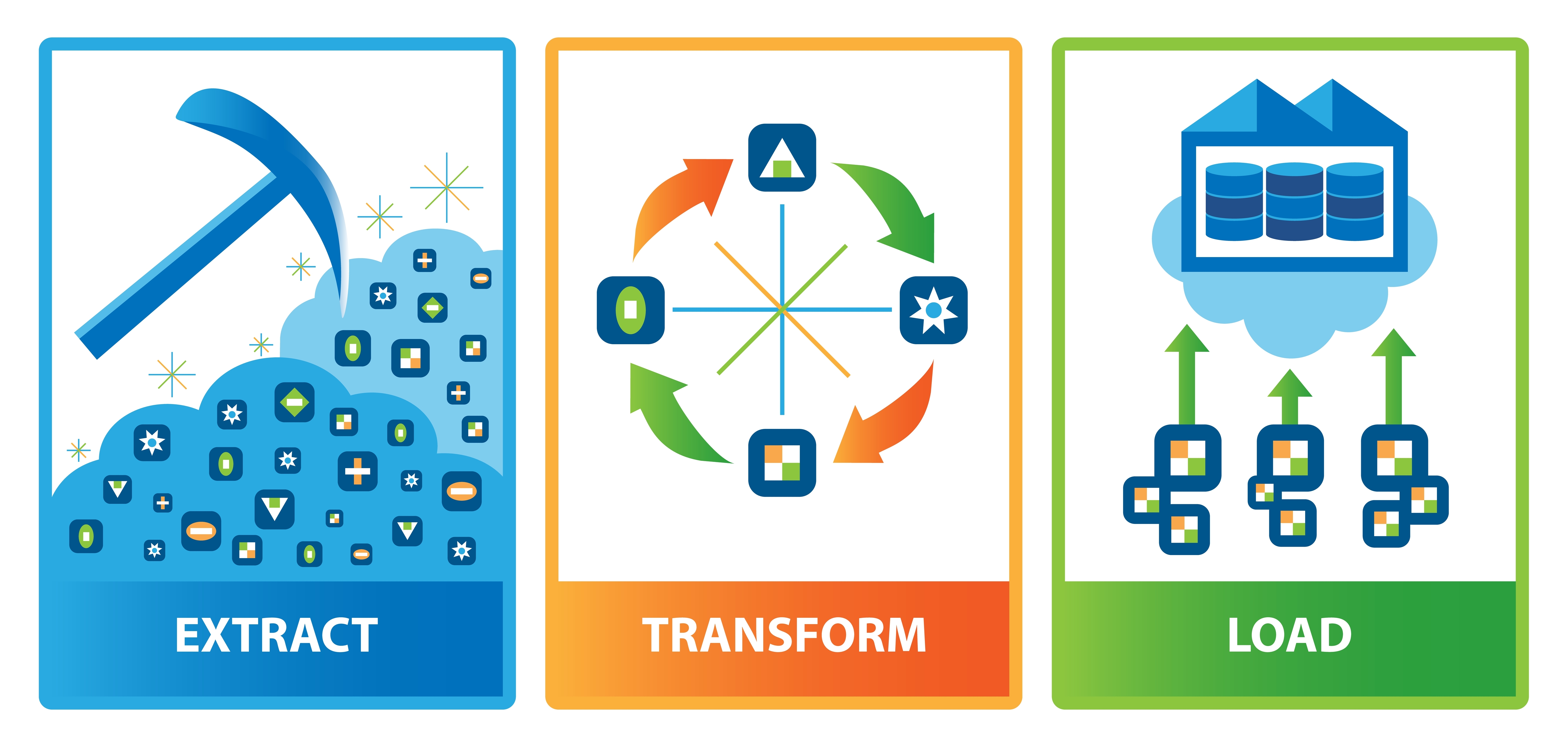
ETL in Plain English
At its core, ETL is a data integration process that takes data out of one or more sources, reshapes it into a clean and consistent format, and writes it to a destination where it can actually be used. As IBM puts it, ETL "combines, cleans and organizes data from multiple sources into a single, consistent data set."
To really get down to basics, think of it like cooking a meal. Your raw ingredients come from different places — the garden, the pantry, the market. Before you can serve a finished dish, you wash, chop, and combine them according to a recipe. ETL is that kitchen workflow, applied to data. The raw ingredients are your scattered systems, the recipe is your set of business rules, and the finished dish is clean, analysis-ready data sitting in a data warehouse or other repository.
The Three Letters: Extract, Transform, Load
Each letter represents a distinct stage in the journey from raw data to usable information.
Extract
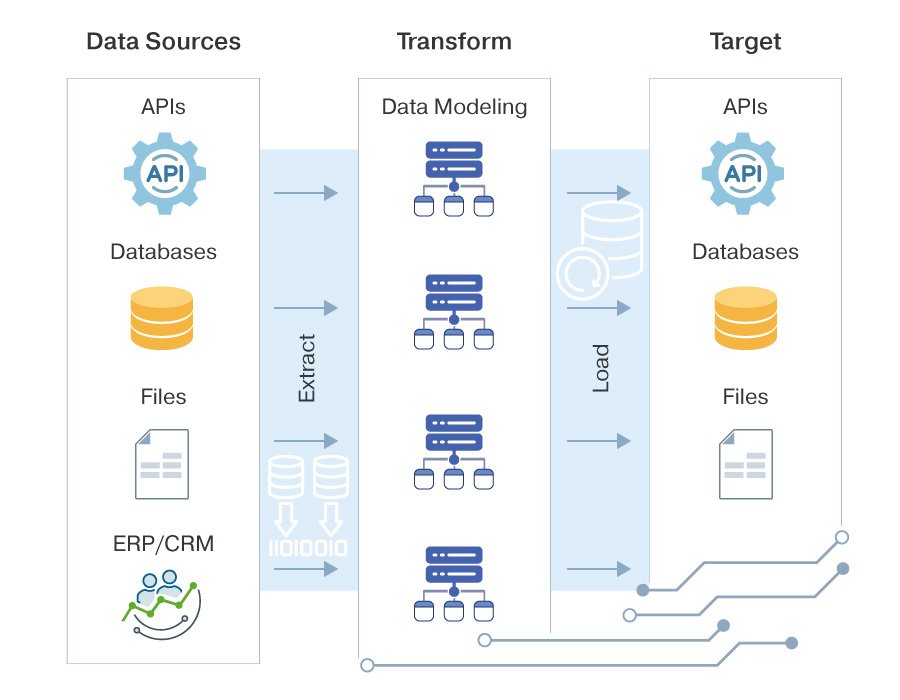
In the extract stage, data is copied or pulled from its original sources into a temporary holding area, often called a staging area. Sources are varied: SQL and NoSQL databases, CRM and ERP systems, Shopify storefronts, spreadsheets, flat files, APIs, web pages, and increasingly streams of sensor data from connected devices. Each of these may store information in its own format — XML, JSON, CSV, EDI, and more — which is exactly why the next step is so important.
Transform
The transform stage is where the real work happens, and it is usually the most complex part of the process. Raw data is cleaned, validated, and reshaped to match the structure your destination expects. Transformation can involve basic operations such as deduplication and format revision, as well as more advanced ones like deriving new values, joining records from different sources, splitting fields, and summarizing large volumes of data. This is the step that turns inconsistent, messy inputs into trustworthy information. Currencies get standardized, duplicate customers get merged, missing values get handled, and sensitive fields can be masked or encrypted to meet regulatory requirements.
Load
Finally, in the load stage, the transformed data is written into its target system — typically a data warehouse, data lake, database, or analytics tool. Loading can happen as a one-time full load of all historical data, or as ongoing incremental loads that add only what has changed since the last run. Most organizations automate this step so that fresh data flows in continuously, often during off-peak hours when systems are least busy.
Why Does ETL Matter?
Without ETL, data stays trapped in silos, formatted in incompatible ways, and riddled with errors and duplicates. Analysts end up spending more time wrangling spreadsheets than actually analyzing anything. ETL solves this by automating the tedious work and delivering a single, consolidated, reliable view of the business. That foundation powers a wide range of activities:
- Business intelligence and reporting, where clean data feeds dashboards and reports.
- Merging and unifying disparate business systems, especially in mergers and acquisitions.
- Data warehousing, which depends on ETL to consolidate historical and current data.
- Machine learning and advanced analytics, which require well-prepared training data.
- Regulatory compliance, where data must be handled and stored according to strict rules.
- Operational efficiency, by eliminating manual data entry and the errors that come with it.
A Quick History
ETL is not new. It emerged in the 1970s alongside the rise of centralized databases and became the standard way to feed data warehouses once relational databases gained popularity in the late 1980s. Early efforts were largely hand-coded by IT teams. As data volumes exploded in the big-data era and then moved to the cloud, ETL tools grew far more sophisticated — adding visual interfaces, automation, real-time streaming, and AI-assisted mapping along the way.
What to Look for in an ETL Tool
Modern ETL software abstracts away the complexity so you do not have to write integration code by hand. When evaluating options, the qualities that matter most include broad connectivity to the data formats and systems you actually use, a user-friendly (often low-code or drag-and-drop) interface, a built-in AI capability that can automatically map sources with targets based on semantics, the ability to handle complex transformations, robust automation and scheduling, strong security and compliance support, and pricing that stays predictable as your needs grow. The best way to judge a tool is to try it on a real-world scenario, so look for one that offers a fully functional free trial.
ETL may sound like jargon, but the idea behind it is refreshingly straightforward: get your data out of wherever it lives, clean it up, and put it somewhere useful. Do that well, consistently, and automatically, and the rest of your data strategy has a solid foundation to build on.